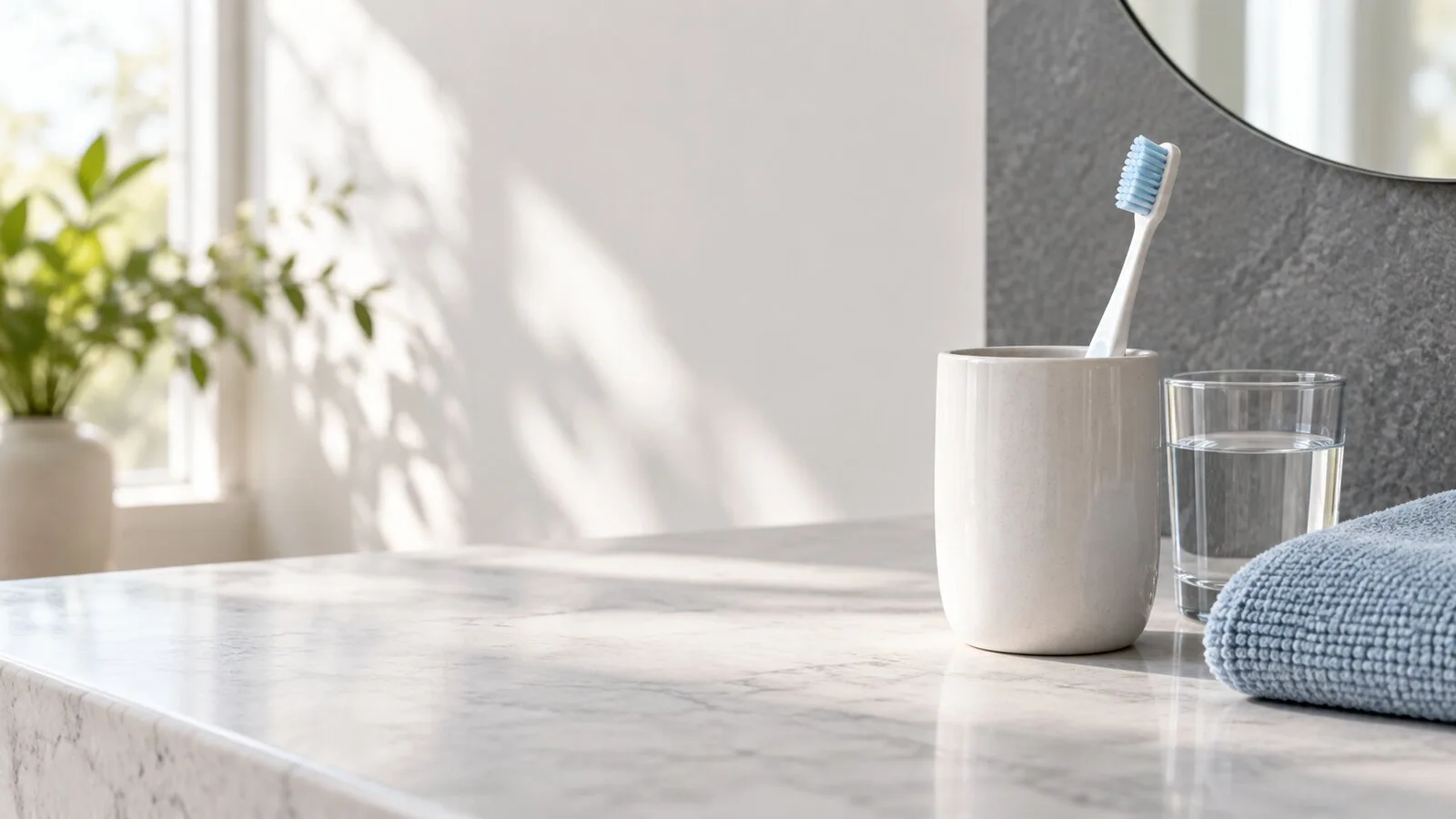
Check the physical design
Identify the model and market because handle, head, and bristle arrangement may vary. Read the package for age, use, care, or replacement guidance. A product family photograph is not enough to establish which brush is in hand.
Consider whether the head reaches comfortably and whether the grip supports controlled movement. A brush that is difficult to position can encourage excessive pressure or missed areas.
Use controlled technique
Apply a gentle, systematic approach rather than scrubbing harder. Reach outer, inner, and chewing surfaces and give attention to the gumline according to guidance from your dental professional. Personal dental needs may call for a specific tool or method.
Do not share a toothbrush. Rinse it after use, remove trapped debris, and store it upright where it can air dry without routine contact with other brush heads.
Inspect and replace
Look for splayed, damaged, or contaminated bristles and changes that make the brush uncomfortable. Follow the package and dental guidance for replacement rather than waiting for severe wear.
EnterKR describes practical product handling and does not turn a toothbrush into a treatment claim. Questions about pain, bleeding, appliances, or an oral condition belong with a qualified dental professional.