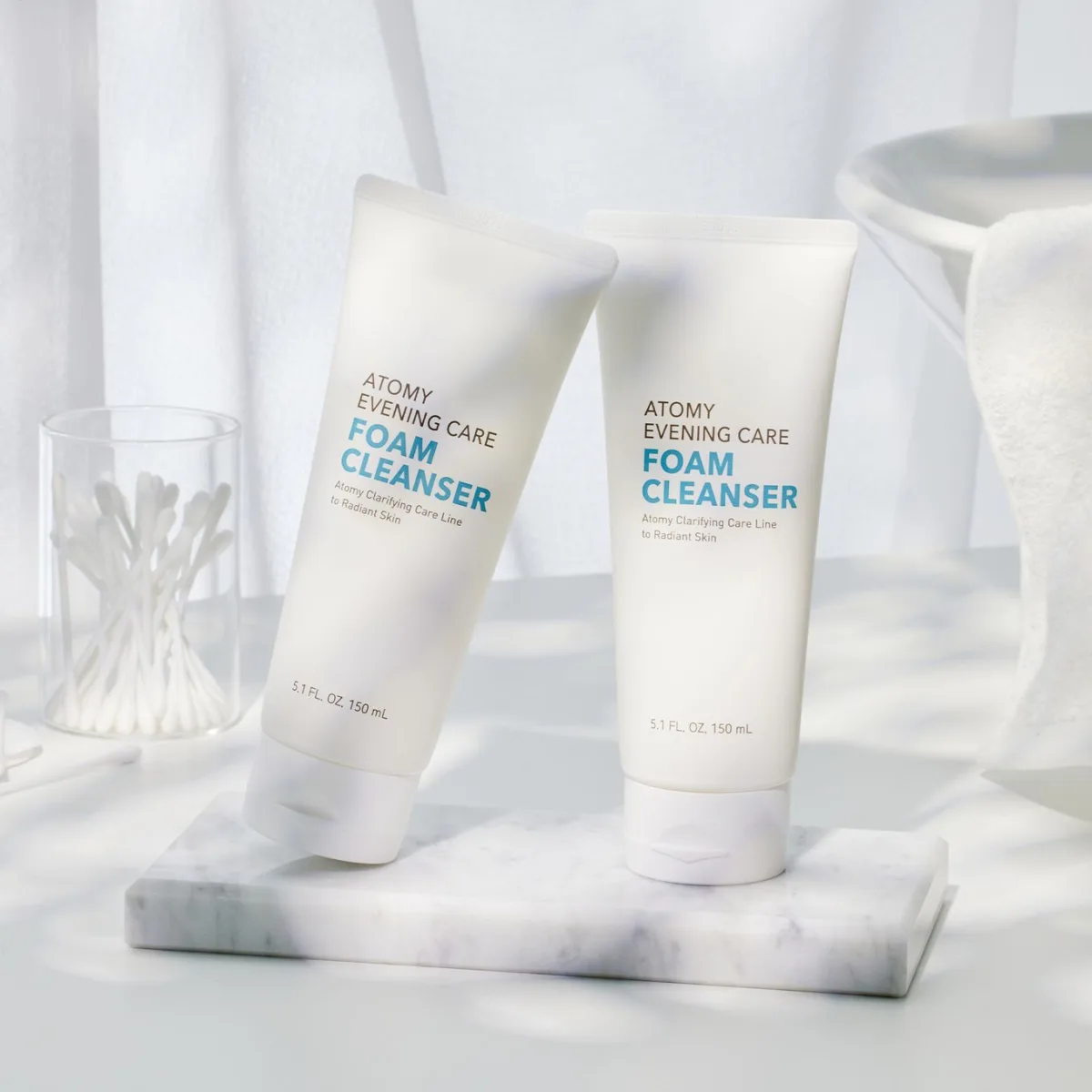
Cleansing is the step where Korean routines differ most visibly from Western ones, and it’s the part newcomers most often get wrong — usually by doing too much of it. This page explains the cleansing formats you’ll find in Atomy’s range, what double cleansing actually means, and how to work out how many cleansing products you genuinely need.
The formats, and what each is for
Cleansing products divide fairly cleanly by what they’re designed to dissolve. Oil-based products handle oil-based things; water-based products handle water-soluble ones. That single distinction explains the whole category.
| Format | What it is | Typically used for |
|---|---|---|
| Cleansing oil | Liquid oil, emulsifies with water | First evening step when wearing sunscreen or makeup |
| Cleansing balm | Solid that melts on contact with skin | Same role as oil, different texture preference |
| Cleansing water | Watery, used on a cotton pad | Light removal, or a quick pass |
| Cleansing foam | Paste or cream that lathers with water | Second evening step; morning cleanse |
| Cleansing gel | Clear gel, lathers lightly | Same role as foam, lighter feel |
| Cleansing tissue / wipes | Pre-soaked cloth | Travel and convenience |
Exactly which of these Atomy sells depends on your country and the current range. Check the cleansing section of your country’s official Atomy mall rather than assuming a product described elsewhere is available where you are.
Double cleansing, explained plainly
Double cleansing means two steps in the evening: an oil-based product first, then a water-based one. It exists for a practical reason. Sunscreen and long-wear makeup are largely oil-soluble, and a foaming water-based cleanser doesn’t remove them well on its own. Trying to force it with a stronger foam, or scrubbing harder, is how people end up with irritated skin.
The sequence:
- Oil or balm, on dry skin, dry hands. Massage for thirty to sixty seconds. Water at this stage stops the oil doing its job.
- Add water and emulsify. Wet your hands and keep massaging — the oil turns milky. This is the step people skip, and skipping it is why oil cleansers get a reputation for leaving residue.
- Rinse thoroughly.
- Foam or gel, on wet skin. Lather in the hands first, then work over the face for another thirty seconds or so.
- Rinse with lukewarm water and pat dry, leaving the skin slightly damp for your toner.
When you don’t need to double cleanse
This is the part that gets lost. Double cleansing is for evenings when there’s something on your face that needs it. If you wore no sunscreen and no makeup and spent the day indoors, one gentle water-based cleanse is fine.
And in the morning, most people don’t need a full cleanse at all — a rinse with water, or a very gentle foam, is the Korean convention. You cleaned your face eight hours ago and have been asleep since.
This page describes product formats and technique, not medical advice, and nothing here is a substitute for professional care. If you have a persistent skin concern, sensitive or reactive skin, or a known allergy, consult a doctor or dermatologist before changing your cleansing routine.
Technique matters more than product
Most cleansing complaints come down to how, not what:
- Lukewarm water, not hot. Hot water feels satisfying and leaves most people’s skin feeling tight afterwards.
- Time, not pressure. Thirty to sixty seconds of gentle work beats fifteen seconds of scrubbing.
- Lather foam in your hands first. Applying a blob of undiluted foam directly to the face concentrates it in one spot.
- Rinse the hairline and jaw. These are where cleanser residue actually collects.
- Pat dry with a clean towel. Not the same towel as yesterday, ideally.
- Move to the next step quickly. Toner goes on damp skin.
How many cleansing products do you actually need?
For most people the honest answer is two, and sometimes one:
- One water-based cleanser — a foam or gel. This is the non-negotiable one.
- One oil-based cleanser — oil or balm, your texture preference. Only genuinely needed if you wear sunscreen or makeup, which, if you’re following the routine advice on this site, you will be in the mornings.
Cleansing waters and wipes are convenience products. They’re useful for travel or for a night when you can’t face the sink, but they’re not a replacement for a proper cleanse as a default.
Oil versus balm: how to pick
They do the same job. The difference is texture and packaging preference:
- Oil comes in a pump bottle, spreads immediately, and is quicker. It can drip.
- Balm comes in a jar or stick, melts on contact, and travels better. It needs a clean spatula or dry fingers to avoid contaminating the jar.
Neither is superior. Buy whichever format you’ll actually reach for at eleven at night, because the best cleanser is the one you don’t skip.
Ingredients and current formulations
As with the rest of the range, we don’t publish ingredient lists here. Cosmetic formulations get revised and labelling differs between markets, so the reliable source is the carton in front of you or the current product page on your country’s official Atomy mall. If you know you react to a particular ingredient, check by name on the actual packaging.
Atomy’s products are manufactured largely through Kolmar Korea, the contract manufacturer the company emerged from in 2009, which is why the range follows mainstream Korean cosmetic conventions rather than unusual proprietary formats.
Fitting it into the routine
Cleansing is steps one and two of the sequence — everything else in a Korean routine assumes it’s been done properly. Once your face is clean and still slightly damp, you’re straight into toner. Our routine order guide covers the full sequence, and the joining page explains how to access the official mall for your country. See our disclosure statement for our relationship to Atomy; this is an independent member site.