If you’ve opened an Atomy skincare set and found both a lotion and a cream inside, the reasonable question is whether you need both. The short answer is: not necessarily, and which one you reach for depends on your skin, the season, and the time of day. Here’s how the two differ and how to decide.
First, the vocabulary problem
In Korean skincare, lotion does not mean what it means on a bottle of body lotion. It means a light milky facial fluid — sometimes labelled emulsion, which is the more descriptive word. It pours rather than scoops.
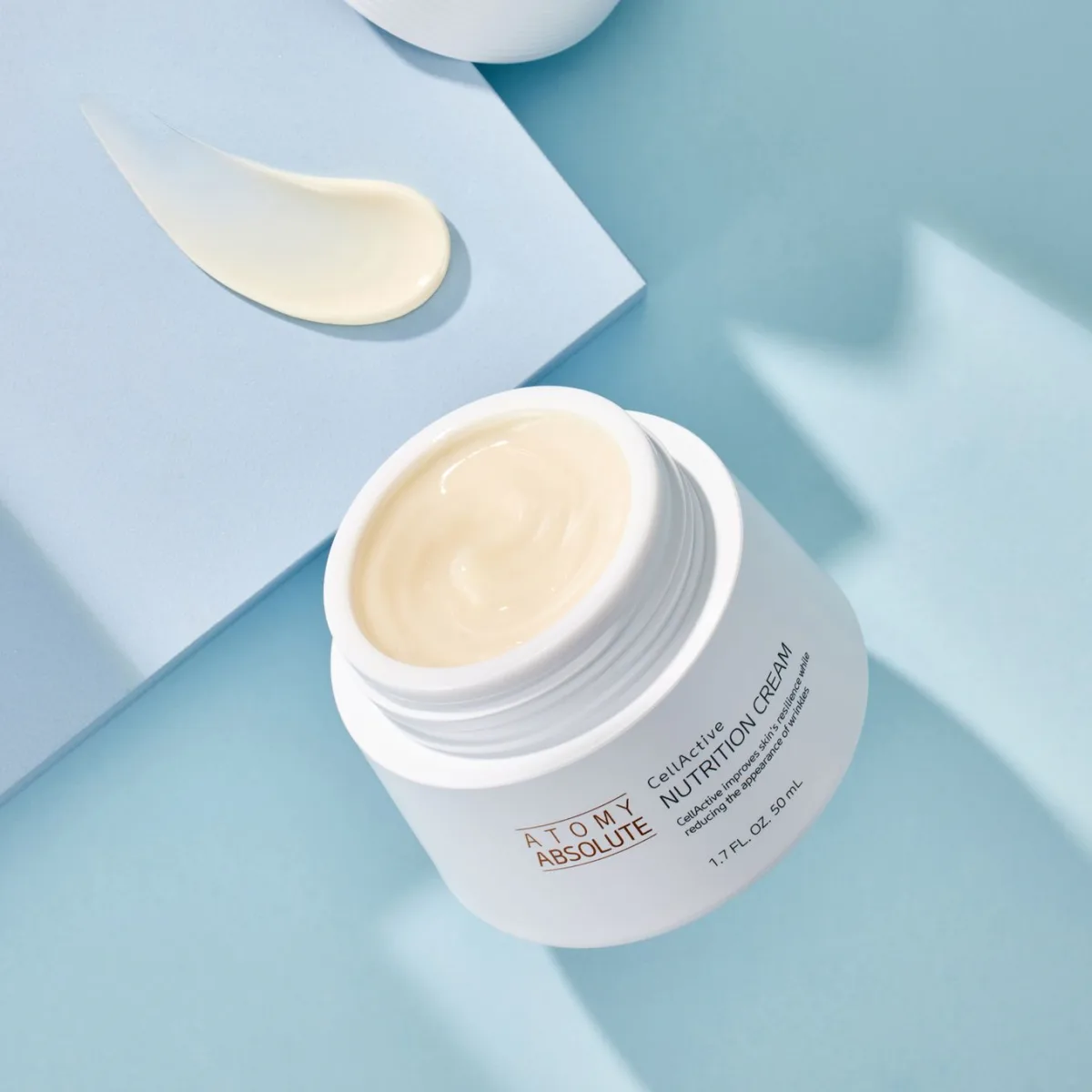
Cream means what you’d expect: a denser product, usually in a jar or a wide-mouthed tube, that holds its shape on a fingertip.
So the pair isn’t “face product and body product”. It’s two moisturising steps at different weights, designed to be used together, separately, or seasonally.
The practical differences
| Lotion (emulsion) | Cream | |
|---|---|---|
| Texture | Light, milky, pourable | Dense, holds shape |
| Packaging | Usually a pump or narrow-neck bottle | Usually a jar or wide tube |
| Where in the routine | After essence | After lotion, last facial step |
| Typical amount | Pea to small almond | Pea-sized |
| Absorption | Sinks in quickly, little residue | Sits on the surface longer |
| Common use pattern | Morning and night, year round | Night, or colder months |
| Under sunscreen or makeup | Generally easier | Can feel heavy for some people |
How to choose
If your skin runs oily or you live somewhere humid
Lotion alone is often the whole answer. Many people in warm climates use a toner, an essence and a lotion and stop there. Adding a cream on top in humid weather is what produces that tacky feeling an hour later, and the usual fix is to drop the cream rather than to buy a different one.
If your skin runs dry or you live somewhere cold
Cream earns its place. Heated indoor air in winter is drying, and the heavier final layer is exactly what it’s for. A common pattern is lotion in the morning and both lotion and cream at night.
If your skin is normal or you’re not sure
Start with lotion only, morning and night, for a fortnight. If your face feels tight in the evening or when you wake up, add cream at night. This is a more useful test than any category label, because “normal skin” is a very broad description and yours will behave differently in February than in August.
If you’re using both
Lotion first, then cream — thinner before thicker, the rule that governs every step in a Korean routine. Reversing them means the lotion mostly sits on top of the cream.
This page describes product textures and routine choices, not medical advice, and nothing here is a substitute for professional care. If you have a persistent skin concern, an eczema or allergy history, or you’re unsure what’s suitable for you, speak with a doctor or dermatologist.
Seasonal switching is normal
One of the more useful habits in Korean skincare is treating the routine as adjustable rather than fixed. The same set of bottles can run as:
- Summer: toner, essence, lotion. Cream stays in the cupboard.
- Spring and autumn: lotion in the morning, lotion and cream at night.
- Winter: both, morning and night, possibly with a little more cream.
Nobody needs to buy a separate winter range for this. The set you have already contains both weights; you’re just choosing which to use.
Getting the quantity right
Overapplication is the most common mistake with both products, and it’s more common with cream because the jar format encourages scooping.
- Cream: a pea-sized amount for the whole face. If it’s still visible on the skin after two minutes, that’s too much.
- Lotion: one to two pumps, or a pea to a small almond by volume.
- Warm it first. Rubbing either product between the fingertips briefly makes it spread much further.
- Don’t forget the neck and jawline, which tend to get missed entirely.
If a set seems to be running out fast, quantity is almost always the reason rather than bottle size.
What about eye cream?
An eye product is a third weight again — usually thicker than face cream, used in much smaller quantity, and applied on the orbital bone rather than the lid. It’s a separate decision from the lotion-versus-cream question. If your set includes one, use a grain-of-rice quantity for both eyes and pat it in with the ring finger.
Ingredients
We don’t publish ingredient lists on this site, because formulations are revised over time and labelling differs between markets. For the current declaration on either product, read the carton or check the product page on your country’s official Atomy mall. If you have a known sensitivity, check by ingredient name on the actual packaging before buying rather than relying on any general description.
A quick decision tree
- Do you already have a moisturiser you’re happy with? Then you likely need neither — swap one step at a time rather than replacing everything.
- Starting from nothing? Lotion first. It’s the more universally usable of the two.
- Face feels tight a few hours after your routine? Add cream at night.
- Face feels tacky or your sunscreen slides? Drop the cream in the morning.
- Season changed? Revisit the decision. It isn’t permanent.
The short version
Lotion is the light moisturising layer; cream is the heavy one that goes on top. Most people don’t need both every day, and using them seasonally is the normal pattern rather than a compromise. Judge by how your skin actually feels a few hours later, not by which product cost more or came in the nicer jar. For how these fit into the wider sequence, see our routine order guide, and our disclosure page for our relationship to the company.