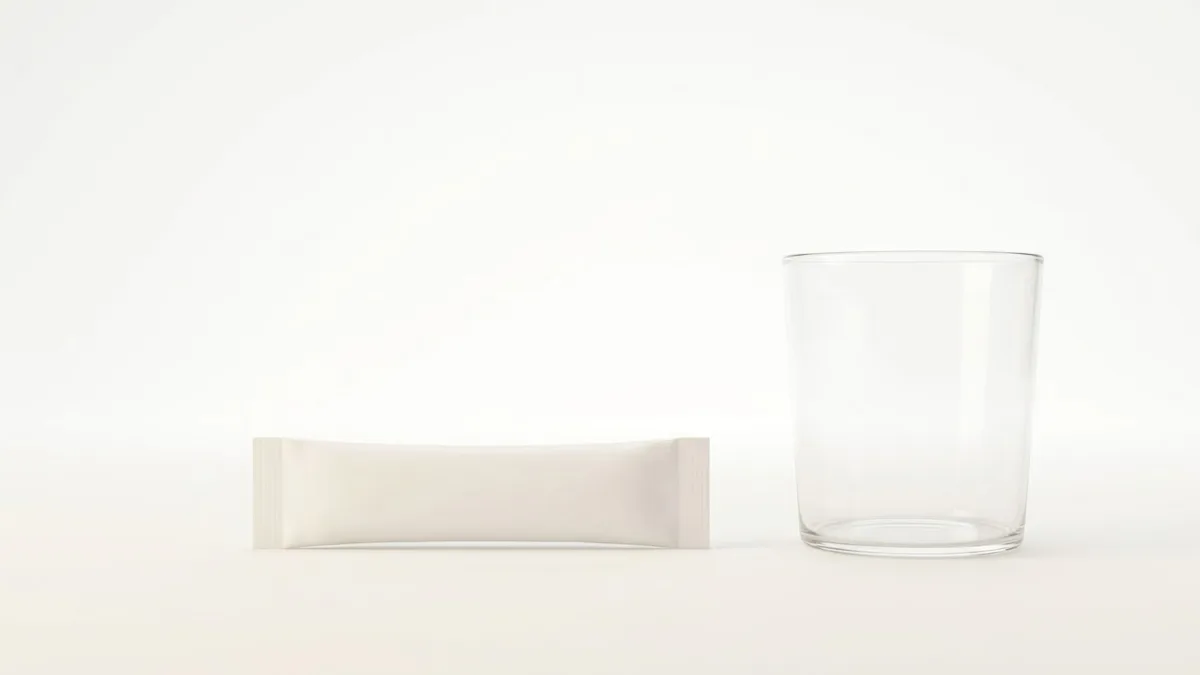
HemoHIM comes up constantly in conversations about Korean supplements, and it is surrounded by more online noise than almost any other product in the category. This page does something narrow and, we hope, useful: it explains what the product physically is, where it came from, and how it is sold — and deliberately says nothing about what it might do to your body, because that is not a claim we are in a position to make.
The short version
HemoHIM is a Korean herbal extract preparation, sold as a food supplement rather than a medicine. It is a liquid, packaged in small single-serve sachets, and it is taken by mouth. It was developed in South Korea, and it is distributed through Atomy in the markets where it has been registered for sale as a food product.
That is genuinely the whole factual core. Everything else you will read online tends to be either a description of the taste and the routine — which is fine — or a claim about health effects, which is where we stop.
Supplements are food products, not medicines. Nothing on this page is intended to diagnose, treat, cure, or prevent any disease, and nothing here is medical advice. If you have a health condition, are pregnant or nursing, or take prescription medication, speak with a qualified healthcare professional before starting any supplement.
What “herbal extract preparation” means in practice
Supplements arrive in roughly four physical formats: tablets, capsules, powders, and liquids. HemoHIM sits in the liquid category. It is made by extracting plant material in water and concentrating the result, which is a very old technique — it is essentially what a traditional herbal decoction is, industrialised and standardised so that every sachet in the box is the same.
The practical consequences of the liquid format are worth knowing before you buy anything in this category:
- You taste it. Unlike a capsule, which bypasses your palate entirely, a liquid extract goes across your tongue. This matters more than people expect.
- It is portioned for you. Single-serve sachets remove the measuring step. You are not counting drops or filling a spoon.
- It travels awkwardly but predictably. Sachets are light and sealed, but they are not something you can decant into a pillbox.
- Storage instructions matter more. Liquids are generally more sensitive to heat and light than dry formats. Read what the box tells you.
What it tastes like
Earthy and distinctly bitter, with a dark herbal quality that most Western palates have no reference point for. It is not sweetened into a fruit drink. People who grew up with traditional Korean or Chinese herbal preparations often find it unremarkable; people who did not often find the first sachet a surprise.
This is not a small point. A supplement you dislike drinking is a supplement that ends up unopened in a cupboard, and that is a waste of money regardless of any other consideration. If strong bitter flavours are a problem for you, know that going in.
Where it came from
HemoHIM was developed in South Korea and reached the market through Atomy’s product line. Atomy itself was founded in 2009 and grew out of Kolmar Korea, a contract manufacturer with a long history of producing cosmetics and health foods for other brands. That manufacturing lineage is part of why the company’s catalogue skews toward formulated products rather than repackaged commodities — we cover that background in more detail on our about page.
Beyond that, we are not going to reconstruct a development history from secondhand sources. If you want the authoritative account of the product’s origin and its ingredient list, the official product page for your country carries the current, legally reviewed version. That is the document to trust, not a member site’s summary — including ours.
The thing we are not going to tell you
Search this product’s name and you will find a great deal of confident writing about physiological effects. Some of it comes from enthusiastic individual sellers. Some of it is straightforwardly translated marketing from markets with different advertising rules. Almost none of it is something an independent member site can responsibly repeat.
Our position on this is simple and we apply it across the whole site. We describe what a product is, what format it comes in, how it is taken, and what it tastes like. We do not describe what it does inside a human body. If someone selling you a supplement makes a specific health promise, that is a strong signal to be more careful, not less — a point we make in our general buying guide too.
A qualified healthcare professional who knows your medical history, your prescriptions, and your circumstances is the only person who can sensibly tell you whether any supplement belongs in your routine. That is not a disclaimer we are adding for legal cover. It is genuinely the correct answer.
Availability differs sharply by country
This is the single most common source of confusion, so it is worth being explicit. Food and supplement regulation is national, not global. Every country maintains its own rules about which ingredients may be sold as food supplements, what must appear on a label, and what a seller may say in advertising.
The consequence is that a product openly sold in Korea may simply not be registered for sale in the United Kingdom, Australia, or anywhere else — and the version that is sold in another market may carry a different label, a different ingredient declaration, or a different name. None of that indicates anything is wrong. It is ordinary regulatory divergence.
So: do not assume that because you read about a product, you can buy it where you live. Check your country’s official Atomy mall for what is actually registered and available in your market. That listing is the authority, and it changes over time.
How it is taken
Typically one sachet, taken by mouth, once or twice a day — but the directions printed on your own pack are what govern, and they can differ between markets. Follow them rather than following anything you read online, including this page. We have written a fuller walkthrough of the practical routine in our companion piece on how the product is actually taken day to day.
Deciding whether to bother
A reasonable way to think about it, stripped of hype:
- Check availability first. If it is not registered where you live, the rest of the question is moot.
- Read the actual label on the official page for your country, not a description of it. Learning to read supplement labels is a skill worth having generally.
- Talk to a healthcare professional if you take prescription medication or have any ongoing condition. Herbal preparations are not inert simply because they are sold as food.
- Consider the taste honestly. Buy a small quantity first if you can.
- Discount the online claims entirely. Both the glowing ones and the dismissive ones.
If you want to know how we make money and why we write this cautiously, our disclosure page lays it out. If something here is unclear, ask us — we would rather answer plainly than have you rely on a forum post.